Turning sound into feeling.
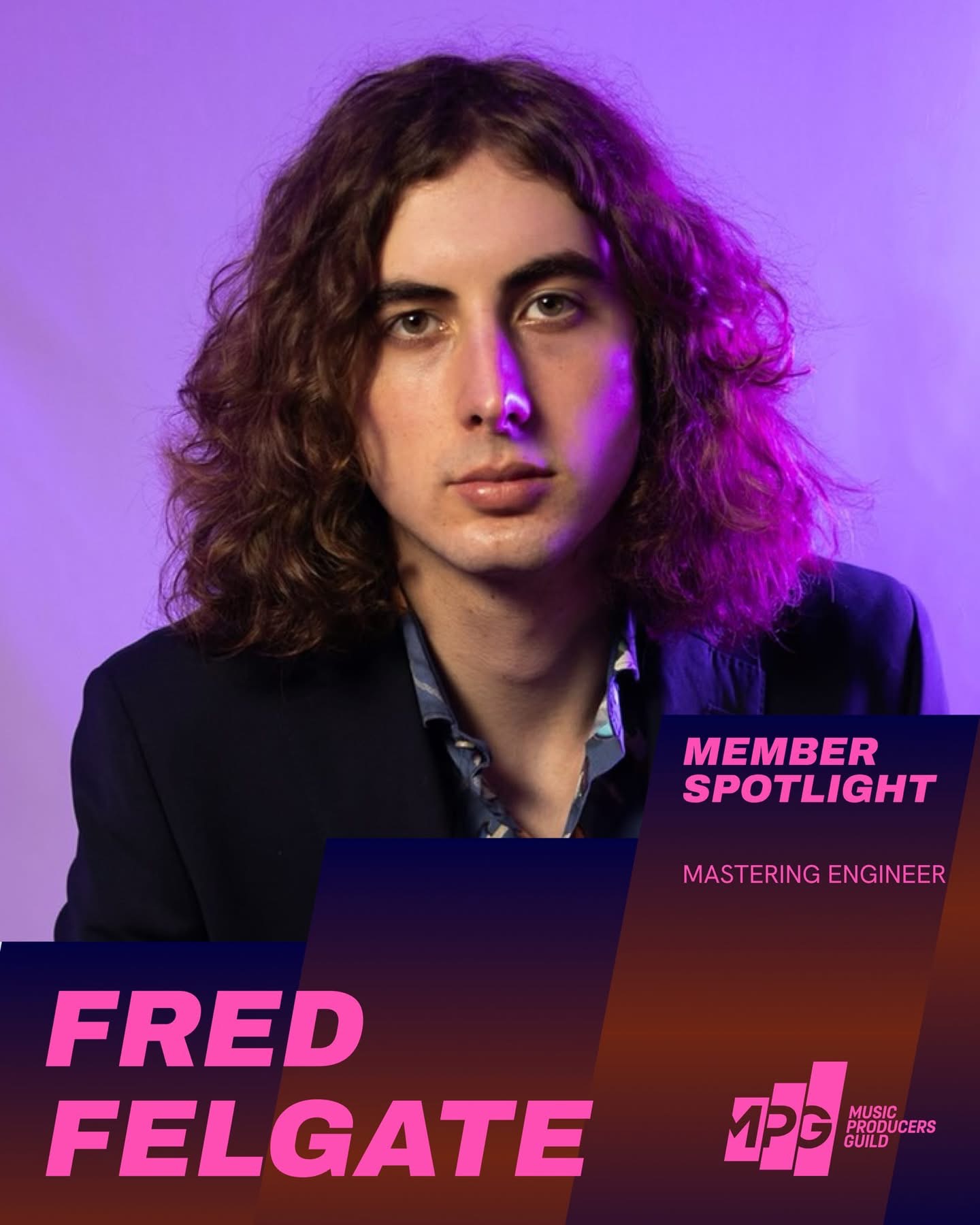
Fred grew up in Rowhedge, Essex; a small village in the south-east of England. Picking up the electric guitar at the age of seven, he started exploring what electronics can do to sound, and how those effects can instigate emotional responses. At fifteen years old, he gained access to his secondary school's studio space for the first time. From his love of pedalboards, Fred already understood the base concepts of signal-flow and gain-staging, so transferring that knowledge to the console, patch-bay and DAW was a natural progression. He went on to achieve a Music Technology scholarship during his A-Levels. This scholarship had never been awarded by the school before.
Although his early idols were the classic rock greats (Jimmy Page, David Gilmour, Jimi Hendrix, etc...), through his adolescence he realised that it wasn't performing that drew him towards music, it was the ability to turn sound into feeling. He began to recognise the engineers behind his favourite music (Glynn Johns, Alan Parsons, Eddie Kramer, etc...) as idols too. Fred loves the guitar, he loves playing music, and from playing a lot of Scottish music with his mum, he has a brilliant ear. But he sees engineering as the mechanics behind it all, and that is what he finds truly fascinating!
Mastering has a unique balance of musicality, and highly detailed technicality. Without a sufficient understanding of both concepts, one cannot be a great mastering engineer.
Identify, then decide.
"My initial intention, upon first listen of any record, is to explore & identify the characteristics that make it engaging, and are signature to the artist. Then, I decide whether I need to adjust, preserve, or support them."
Understanding Mastering
"Mastering is to a mix, what lacquer is to paint."
Recording and mixing is where the creative vision becomes a real, tangible thing. Mastering seals this work of art, so that it's ready to be seen by the world. The mix can contain broad, bold brush strokes, or tiny details only visible upon close observation. The lacquer must be applied with great care and a pristine finish, building each layer with no imperfections. It makes all the colours pop, deepens textures and preserves the art beneath it.
Mixes are usually more dynamic – without mastering, or reasonable stereo-buss processing, it will sound brilliant in a high-headroom, controlled listening environment, but will lose its integrity and depth on consumer audio devices and systems. This is most noticeable in the softer background elements and the low-end feeling less powerful. Mastering fortifies the mix, without changing its character, or the balance of its individual elements, therefore allowing it to maintain its integrity across all listening devices and systems; from home Hi-Fi speakers, to ear-buds, in the car, at your local café, through your phone, laptop, Bluetooth speaker, etc... There is an awful lot to consider when getting a record to translate across all of these different systems. And translatability is only one aspect of mastering.
Loudness
"While almost any loudness can be achieved nowadays, it is not my main priority – unless it is made clear to me that it's a priority for you."
It is becoming increasingly known that most streaming platforms now have fairly complex back-ends, that are primarily designed for loudness management across all tracks on their platform. Fred translates this into his mastering practice as having more freedom to make the track sound as good, rather than as loud as possible.
Listeners do not prefer heavy compression. Louder masters do not result in more sales, and likewise, more dynamic masters do not harm sales. Here's the research.
Many thanks to Mastering Engineer and Music Producers Guild member, Ian Shepherd, for collating the research linked above.